Salta & Jujuy: Argentina’s Most Colorful Corner and Why It Belongs on Every Traveler’s Bucket List
Your complete guide to Argentina’s breathtaking northwest, curated by 01 Argentina Travel Agency — trusted by thousands of travelers worldwide
There is a version of Argentina that most travelers never see. Not the one on the postcards — the tango dancers of Buenos Aires, the glaciers of Patagonia, the thundering curtain of Iguazú Falls. This other Argentina exists in the country’s far northwest, where the Andes descend into a landscape of impossible colors, where pre-Columbian villages cling to canyon walls that have stood for millennia, and where the air itself carries the scent of dried herbs, clay, and altitude. This is Salta and Jujuy — and once you have been, nothing else quite compares.
At 01 Argentina Travel Agency, we have been designing tours to Argentina’s northwest for many years, guiding thousands of international travelers through one of South America’s most visually extraordinary and culturally layered regions. What consistently surprises our clients is not just how beautiful it is — they expected that — but how profoundly different it feels from every other part of Argentina they have visited. The northwest is a world unto itself, and this guide is your introduction to it.
A Region Unlike Any Other in Argentina
Most of Argentina’s famous destinations share a certain character — they are either defined by European urban sophistication, like Buenos Aires, or by raw natural grandeur, like Patagonia. The northwest breaks that pattern entirely. Here, the dominant influences are indigenous Andean culture, colonial Spanish architecture, and a geological drama so vivid it borders on surreal.
The provinces of Salta and Jujuy together form the heart of what Argentines call the Noroeste — the northwest — and they are a study in contrasts. Salta city is elegant and colonial, nicknamed “Salta la Linda” (Salta the Beautiful) for its well-preserved 18th-century architecture and its unhurried, cultured atmosphere. Jujuy province, stretching further north toward the Bolivian border, grows wilder and more ancient the further you travel into its valleys and highlands. Between these two provinces lies a concentration of landscapes, cultures, and experiences that rewards every traveler who makes the journey.
Salta City: Colonial Beauty at the Foot of the Andes
Every northwest tour begins in Salta city, and it is a destination that earns its reputation immediately. The historic downtown — compact, walkable, and immaculately preserved — is built around the central Plaza 9 de Julio, one of the finest colonial squares in all of Argentina. The Cathedral of Salta, with its distinctive pink and white facade, anchors one side of the plaza; the Cabildo (colonial town hall), now home to the Historic North Museum, occupies another. Together they create a streetscape that feels both deeply Argentine and strikingly different from anything found further south.
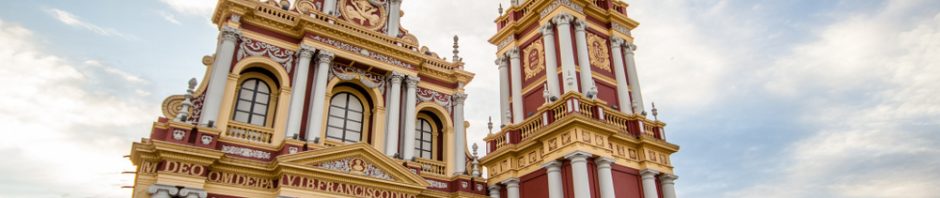
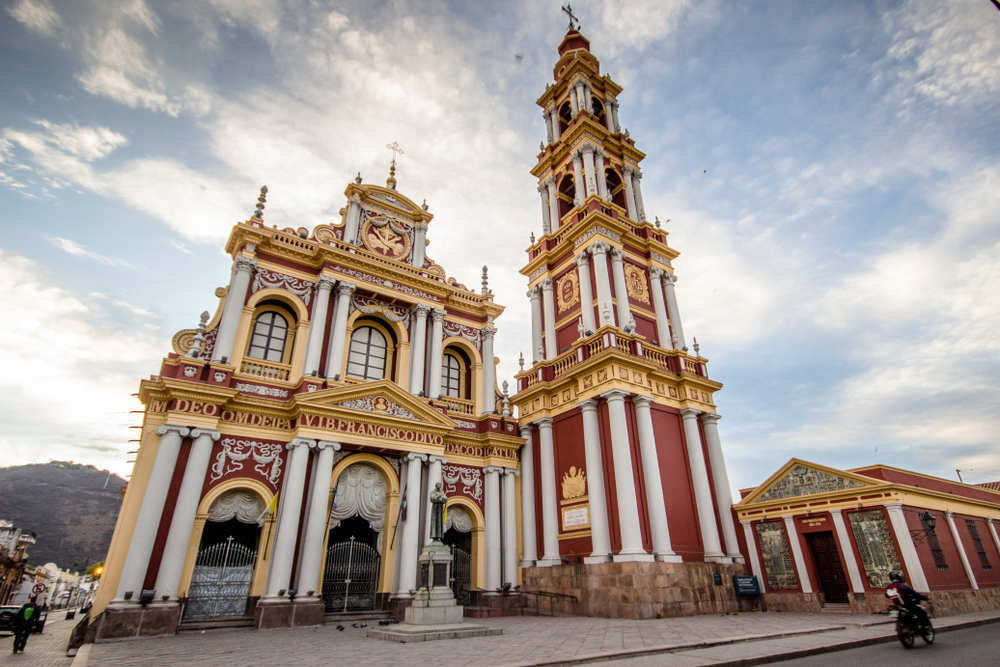
The Church of San Francisco, just a short walk from the plaza, is widely considered one of the most beautiful baroque churches in South America — its towering orange and white bell tower rising above the surrounding streets in a way that stops pedestrians mid-step. The city’s craft market, located near the historic center, offers some of the finest regional artisanship in Argentina: hand-woven textiles in the deep reds and ochres of the Andean palette, carved wooden figures, silver jewelry influenced by indigenous design traditions, and ceramic pieces that reflect centuries of local craft.
Beyond the downtown, the neighborhood of San Lorenzo — a lush, forested suburb roughly fifteen kilometers from the city center — provides a glimpse of the subtropical yungas ecosystem that cloaks the eastern slopes of the Andes. It is a natural contrast to the arid highlands that await further north, and a beautiful place to spend a quiet afternoon.
As part of every tour we operate in the northwest, 01 Argentina Travel Agency includes a guided city tour of Salta on the afternoon of arrival — a thoughtful introduction to the region that sets the cultural context for everything that follows over the next three days.
Salinas Grandes: Walking on Another Planet
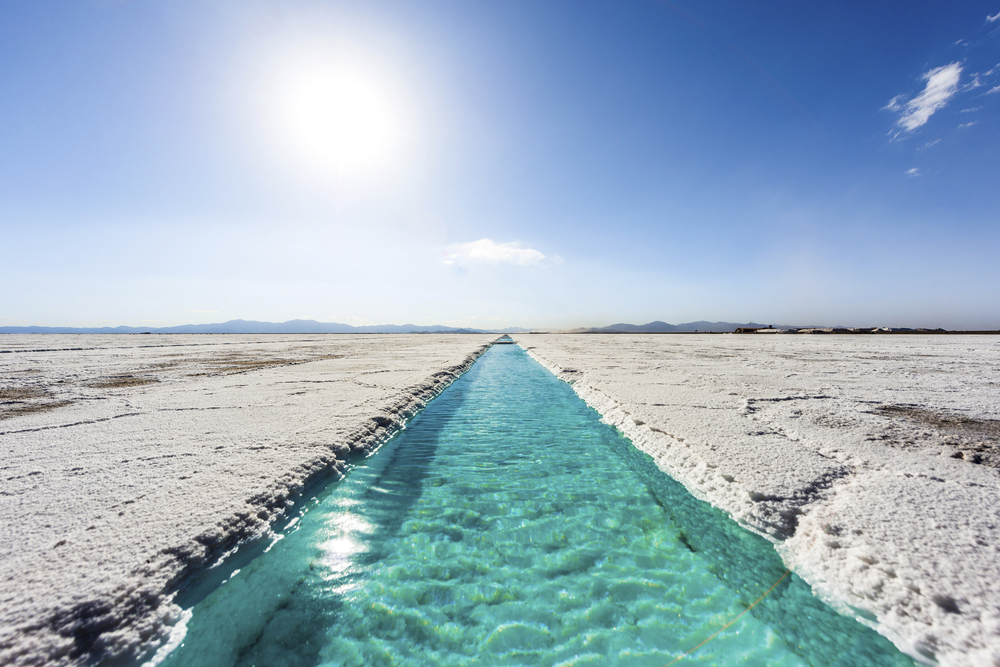
If the northwest has a single image that stops people mid-scroll when they encounter it online — a vast, blinding white expanse stretching to a horizon of purple mountains beneath an impossibly blue Andean sky — it is the Salinas Grandes. Located at approximately 3,450 meters above sea level in the province of Jujuy, this enormous salt flat covers more than 200 square kilometers and is one of the most visually striking landscapes in all of South America.
The salt crust, which reaches up to half a meter in depth in places, was formed over thousands of years as ancient lakes evaporated in the dry Andean climate, leaving behind a mineral deposit of extraordinary purity. Walking across the surface — which is firm, crystalline, and almost reflective in the midday light — is a genuinely otherworldly experience. The silence out here is total, broken only by the wind, and the scale of the landscape makes it almost impossible to judge distance.
Local salt workers still harvest the Salinas using traditional methods, cutting the salt into uniform blocks and loading them by hand. If you visit during working hours, watching this process adds a fascinating human dimension to what might otherwise feel like a purely geological spectacle.
Our northwest tours depart for the Salinas Grandes early in the morning, allowing travelers to experience the salt flat in the extraordinary morning light before the midday heat peaks and before tour buses from surrounding towns begin to arrive in numbers.
Purmamarca and the Hill of Seven Colors: Nature’s Own Palette
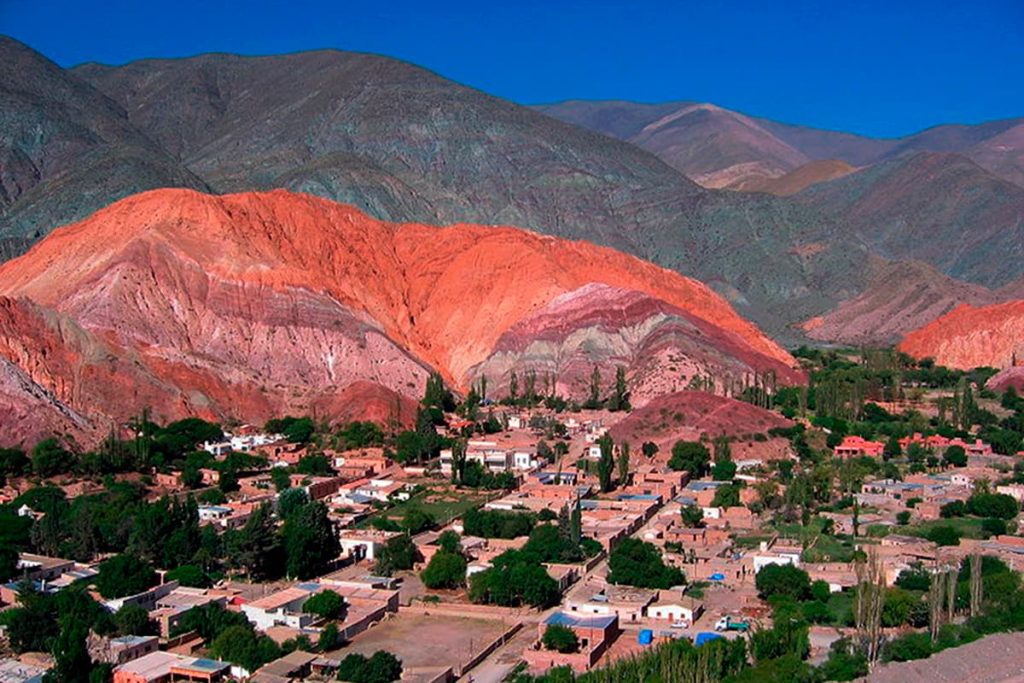
From the Salinas Grandes, the tour descends into the Quebrada de Humahuaca — a dramatic canyon valley that cuts through the mountains like a wound — and arrives at Purmamarca, a small village of perhaps a few hundred permanent residents that has become one of the most photographed places in Argentina. The reason is immediately apparent.
Rising directly behind the village, the Cerro de los Siete Colores — the Hill of Seven Colors — presents a geological layercake of mineral deposits in shades of red, purple, green, yellow, white, and ochre that seem almost artificially vivid. The colors shift and deepen depending on the time of day and the angle of the light, and in the late afternoon, when the sun drops toward the western mountains and casts long shadows across the strata, the hill achieves a beauty that photographers find almost impossible to capture adequately.
Purmamarca itself is a place of genuine charm. Its small central plaza, shaded by a 400-year-old carob tree, is surrounded by adobe houses in the warm earth tones of the valley. The local artisan market — one of the most authentic in the northwest — sells weavings, ponchos, and jewelry made by local Andean communities, and the quality of the craftsmanship is consistently high. The village also offers some of the finest regional cuisine in Jujuy: locro, humitas (steamed corn parcels wrapped in their own husks), and tamales prepared according to recipes that predate the colonial era.
The Quebrada de Humahuaca: A UNESCO World Heritage Landscape
Stretching for approximately 155 kilometers through the province of Jujuy, the Quebrada de Humahuaca is one of Argentina’s two UNESCO World Heritage Sites designated for both its natural and cultural significance. The designation, awarded in 2003, recognizes the valley as a route of cultural exchange used for more than ten thousand years — first by pre-Columbian civilizations moving between the Andean highlands and the lowlands to the east, then by the Inca Empire as part of its vast road network, and later by Spanish colonial forces and Argentine independence fighters.
The canyon walls — which in places rise hundreds of meters on both sides of the valley — display the same vivid mineral coloration found at Purmamarca, but here the scale is grander and the landscape more raw. Small towns and villages dot the valley floor, each with its own church, plaza, and character. Tilcara, home to a significant pre-Inca fortress known as the Pucará, is one of the most historically interesting stops in the entire northwest. The Pucará — a hilltop fortification built by the Tilcara people before the Inca conquest — offers sweeping views over the valley and provides important context for the deep indigenous history of the region.
Humahuaca itself, the largest town in the valley, retains much of its colonial architecture and hosts a remarkable carnival celebration each February that draws visitors from across Argentina and beyond.
Cafayate and the Calchaquí Valleys: Where the Andes Make Wine
On the third day of the northwest tour, the journey turns south from Salta city toward Cafayate — and the road itself is worth the trip. The route through the Quebrada de las Conchas passes through a sequence of geological formations so dramatic and varied that the drive takes considerably longer than the distance would suggest, because stopping to photograph the red sandstone canyons, the natural rock windows, and the formations known locally as the Amphitheater and the Devil’s Throat is simply irresistible.
Cafayate, set at 1,683 meters in the heart of the Calchaquí Valleys, is Argentina’s second most important wine region after Mendoza — and among wine enthusiasts, it is increasingly considered the more distinctive of the two. The region produces Torrontés, an aromatic white grape variety found almost exclusively in northwestern Argentina, which thrives in the high-altitude, low-humidity conditions of the valley and produces wines of exceptional fragrance and character. Several of Cafayate’s boutique wineries offer tastings in beautiful settings, with views over the vineyards to the surrounding Andean peaks.
The town itself is unhurried and genuinely charming, with a central plaza lined with cafes, a small but well-curated wine museum, and a local artisan market. After two days of high-altitude landscapes, Cafayate’s warmth and greenery feel like a gentle reward — and a glass of chilled Torrontés on a shaded terrace overlooking the vines is one of those simple travel pleasures that stays with you for a long time.
At 01 Argentina Travel Agency, our Cafayate day includes guided winery visits with tastings, a stop at the most dramatic formations of the Quebrada de las Conchas on both the outward and return journey, and a leisurely lunch in the town before heading back to Salta in the late afternoon.
A Practical Note on Altitude
The northwest of Argentina involves significant changes in elevation, and it is important to approach this honestly. The tour to the Salinas Grandes and Purmamarca reaches altitudes of over 4,200 meters above sea level — higher than most destinations in the Peruvian Andes. At these elevations, altitude sickness (known locally as soroche) is a genuine consideration, particularly for travelers arriving directly from Buenos Aires at sea level.
Symptoms can include headaches, mild nausea, dizziness, and shortness of breath, and they vary significantly from person to person regardless of age or fitness level. Drinking plenty of water, avoiding alcohol on the first day, moving at a relaxed pace, and giving the body time to acclimatize are the most effective precautions. Mate de coca — a herbal tea made from coca leaves, widely available throughout the northwest and perfectly legal in Argentina — is a traditional Andean remedy for altitude discomfort that many travelers find genuinely helpful.
Our guides at 01 Argentina Travel Agency are experienced in managing high-altitude itineraries and always brief travelers fully before the ascent. The pace of the tour is deliberately designed to allow gradual acclimatization, and our team is available to provide support and guidance throughout.
FAQ: Salta & Jujuy Tours
Q: When is the best time of year to visit Salta and Jujuy?
The northwest can be visited year-round, but the most comfortable and scenic periods are spring (September to November) and autumn (March to May). Winter (June to August) brings clear skies and crisp air that make for spectacular photography, though nights at altitude can be very cold. The rainy season runs from December through February, when afternoon storms are common in the valleys — though mornings are generally clear and the landscape turns notably greener.
Q: How fit do I need to be for this tour?
The tour itself does not involve trekking or strenuous physical activity — the majority of the time is spent on scenic drives with stops at viewpoints, villages, and natural sites. That said, the altitude is a genuine factor, and travelers with cardiovascular conditions or respiratory issues should consult their doctor before booking. 01 Argentina Travel Agency is always happy to discuss the physical demands of the itinerary in detail before you confirm your reservation.
Q: What is included in the 01 Argentina Travel Agency northwest tour package?
Our standard Salta and Jujuy tour package includes return flights from Buenos Aires to Salta, all airport and hotel transfers, three nights of hotel accommodation with breakfast, a guided city tour of Salta, a full-day excursion to the Salinas Grandes and Purmamarca, a full-day tour to Cafayate with winery visit and wine tasting, English-speaking guides throughout, and all applicable taxes. Accommodation options range from comfortable three and four-star hotels to luxury five-star properties including the Sheraton Salta for those seeking a premium experience.
Q: Can this tour be combined with other Argentine destinations?
Absolutely. Many of our clients combine the northwest with Iguazú Falls, Buenos Aires, or even Patagonia as part of a longer Argentina journey. Our team at 01 Argentina Travel Agency specializes in designing seamless multi-destination itineraries that connect the northwest with other regions, handling all flights, transfers, and logistics so that the experience flows without friction.
Q: Is Salta and Jujuy suitable for families with children?
Yes, with some considerations around altitude. Children are generally more susceptible to altitude effects, and we recommend a slightly more gradual pace when traveling with young ones. The region is otherwise enormously engaging for children — the landscapes are dramatic and visually stimulating, the local markets are full of color and activity, and the open spaces of the salt flats and canyon valleys provide genuine freedom to explore. Our team will always adapt the itinerary to suit families traveling with children of different ages.
Ready to experience Argentina’s most colorful corner? Contact 01 Argentina Travel Agency today and let our northwest specialists design the Salta and Jujuy journey you will be talking about for years.